


When working in a hot environment, selecting the right lab coat is crucial for both comfort and safety. As a lab coat supplier, I understand the challenges faced by professionals in such conditions and am here to guide you through the process of choosing the most suitable lab coat.
Understanding the Requirements of a Hot Environment
In a hot environment, the primary concern is to ensure that the lab coat allows for proper ventilation and heat dissipation. Traditional lab coats made of heavy materials can trap heat, leading to discomfort, excessive sweating, and even heat - related illnesses. Therefore, the material of the lab coat is of utmost importance.
Material Considerations
Lightweight Fabrics
Lightweight materials are a must - have for hot environments. Polyester and cotton blends are popular choices. Polyester is known for its durability and resistance to wrinkles, while cotton is breathable and absorbs moisture well. A blend of these two materials combines the best of both worlds. For example, a 65% polyester and 35% cotton blend lab coat provides a good balance of comfort and functionality. It is lightweight, allowing air to circulate freely around the body, and can wick away sweat, keeping the wearer dry.
Disposable Materials
Disposable lab coats are an excellent option for hot environments. They are typically made of non - woven materials such as polypropylene. These materials are extremely lightweight and breathable. Disposable Laboratory Coats are often designed with a loose fit, which further enhances air circulation. They are also cost - effective, especially in settings where lab coats need to be changed frequently due to contamination.
Another type of disposable option is Disposable White Lab Coats. The white color reflects sunlight and heat, reducing the amount of heat absorbed by the body. This can significantly improve comfort in hot outdoor or indoor environments with high temperatures.
Design Features for Heat Management
Ventilation Zones
Some lab coats are designed with ventilation zones. These are areas on the coat, usually under the arms or along the back, where there are mesh panels or perforations. These ventilation zones allow hot air to escape and fresh air to enter, creating a natural airflow that helps to cool the body. When choosing a lab coat, look for models with well - placed ventilation zones to maximize comfort in a hot environment.
Loose Fit
A loose - fitting lab coat is more comfortable in hot weather compared to a tight - fitting one. It allows air to circulate freely around the body, preventing the build - up of heat and moisture. A lab coat that is too tight can restrict movement and trap heat, leading to discomfort. Opt for a lab coat with a relaxed fit that still provides the necessary coverage and protection.
Durability and Protection
While comfort is a top priority in a hot environment, durability and protection should not be overlooked. In a laboratory setting, lab coats need to protect the wearer from chemicals, spills, and other hazards.
Reinforced Seams
Lab coats with reinforced seams are more durable and less likely to tear or come apart during use. This is especially important in a busy laboratory where the coat may be subjected to a lot of movement and handling. Look for lab coats with double - stitched or taped seams for added strength.
Chemical Resistance
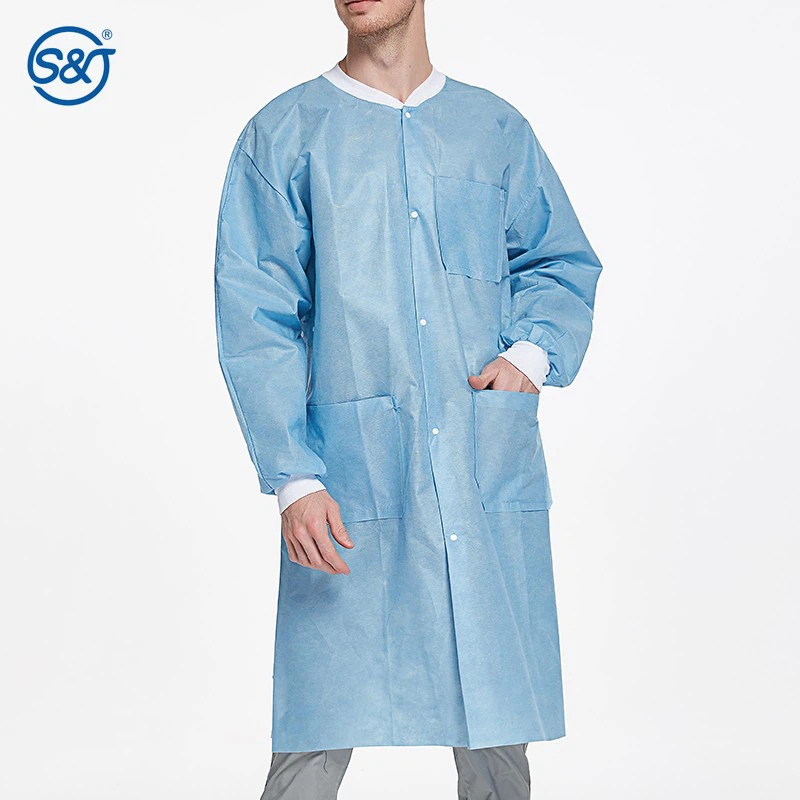
Depending on the nature of the work, chemical resistance may be a crucial factor. Some disposable lab coats are treated to be resistant to certain chemicals. For example, S&J Plus SMS Lab Coat with 3 Pockets Knee Length Ciel Blue offers a certain level of chemical resistance while still being suitable for hot environments due to its lightweight construction.

Color and Aesthetics
The color of the lab coat can also have an impact on comfort in a hot environment. Light - colored lab coats, such as white or light blue, reflect heat better than dark - colored ones. Dark colors absorb more heat, which can make the wearer feel hotter.
In addition to functionality, the aesthetics of the lab coat can also play a role. A well - designed and professional - looking lab coat can boost the confidence of the wearer. Some lab coats come in different styles and colors, allowing you to choose one that suits your personal taste and the requirements of your workplace.
Sizing and Fit
Proper sizing is essential for both comfort and functionality. A lab coat that is too small can be restrictive and uncomfortable, while one that is too large may get in the way and pose a safety hazard. When choosing a lab coat, refer to the size chart provided by the manufacturer. Measure your chest, waist, and length accurately to ensure a proper fit.
Cost - Effectiveness
As a lab coat supplier, I understand that cost is an important consideration for many customers. Disposable lab coats are generally more cost - effective in the long run, especially in high - turnover environments. They eliminate the need for laundering, which can save time and money. However, if you require a more durable and long - lasting lab coat, a reusable one made of high - quality materials may be a better investment.
Conclusion
Choosing the right lab coat for a hot environment involves considering multiple factors, including material, design, durability, protection, color, sizing, and cost - effectiveness. By carefully evaluating these factors, you can select a lab coat that provides both comfort and the necessary protection in a hot workplace.
If you are interested in purchasing lab coats for your laboratory or workplace, we are here to assist you. Our wide range of lab coats, including disposable and reusable options, is designed to meet the diverse needs of different environments. Contact us to discuss your requirements and explore the best lab coat solutions for your hot - environment work.
References
- Textile Institute. (2023). Handbook of Technical Textiles. Woodhead Publishing.
- Occupational Safety and Health Administration (OSHA). (2023). Personal Protective Equipment Guidelines.